
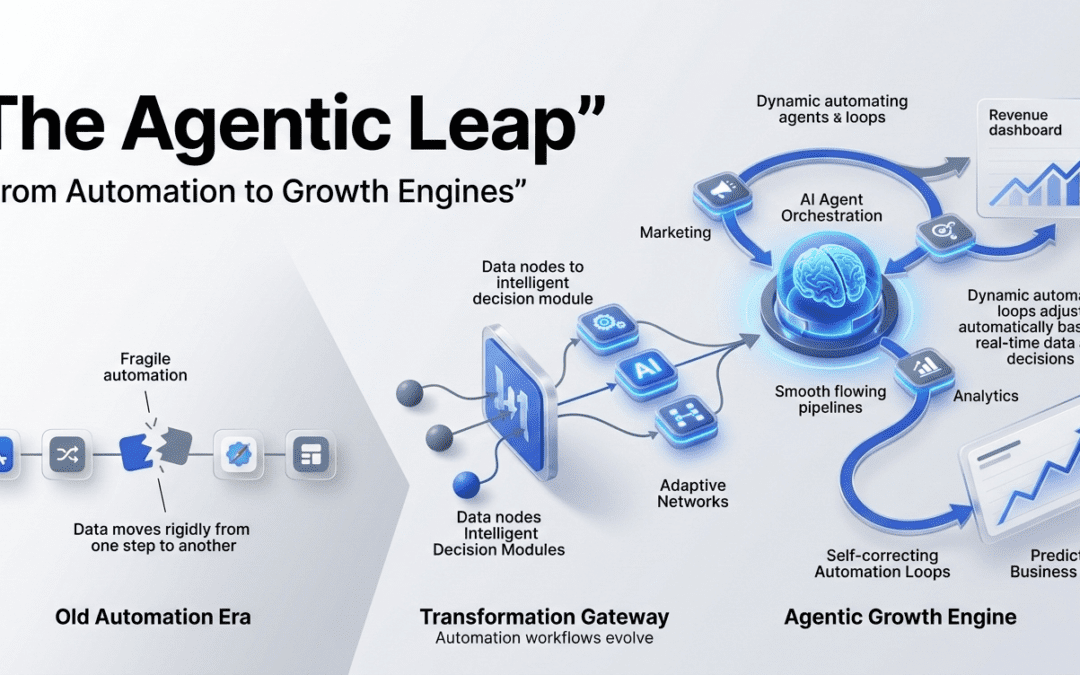
In 2026, the shift from linear automation to Agentic Workflows is mandatory. Unlike the old “set-and-forget” Zaps that break the moment something unexpected happens, autonomous AI agents behave more like junior operators. They understand the goal, notice when something goes wrong, and make adjustments instead of blindly pushing forward.
Instead of firing off rigid IFTTT rules and hoping nothing breaks, these systems are built to notice when something’s off. They pause, reroute, and fix small issues before they turn into silent failures, which means your workflows don’t need constant supervision.
That shift removes the slow decay you see in most automations, tightens up RevOps, and keeps your brand consistently visible in AI-driven recommendations and citations — without someone having to babysit dashboards all day. As an AI Marketing Strategist who builds Predictable Growth Engines, I’ve designed this 2,500+ word manifesto to serve as a technical blueprint for CEOs. This is not a blog post; it is a proprietary audit of the 2026 automation economy.
The Death of the “Dumb” Zap: Comparing 2024 vs. 2026 Technology
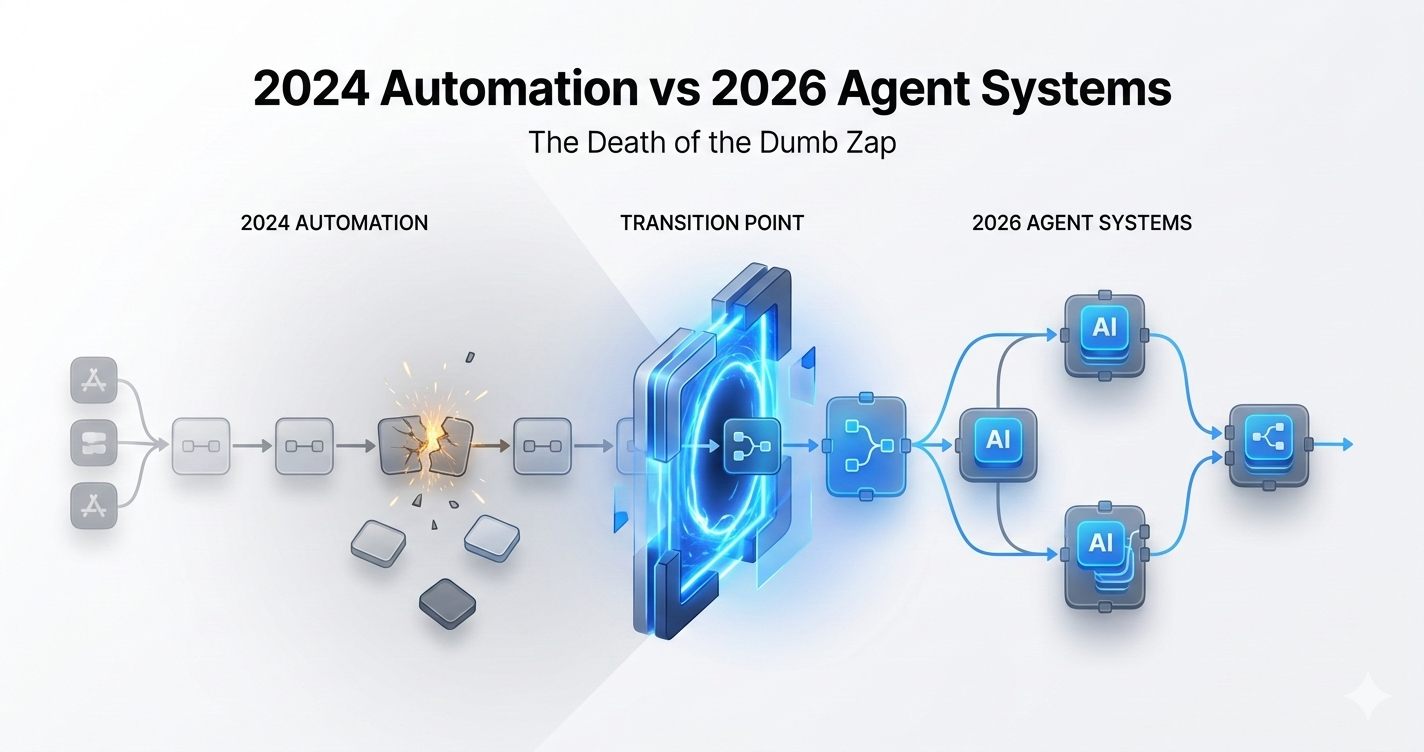
The year 2024 represented the peak of “automation by connection.” At that time, an AI Marketing Strategist primarily focused on moving data from a Facebook Lead Form to a Google Sheet. It was linear, binary, and ultimately, fragile. In 2026, that model is obsolete. To rank in the modern era, one must acknowledge that “moving data” is a commodity; AI Marketing Orchestration is the high-value asset.
The Fragility of Linear Logic (IFTTT)
Legacy automation is “deterministic.” If a lead enters their name as “John Doe (CEO),” a traditional Zap will faithfully put that entire string into your CRM. When your automated email goes out saying “Hi John Doe (CEO),” you’ve instantly signaled to a high-value prospect that you are using a “cheap” bot. This Operational Fragility is the silent killer of Social Proof.
The Rise of the Reasoning Layer
Agentic Workflows introduce a Probabilistic Reasoning layer. According to
Key Takeaway: Legacy automation follows instructions; Agentic SEO and automation pursue outcomes through Chain-of-Thought (CoT) Reasoning.
What is Agentic Drift? The Audit of Why Leads are Failing
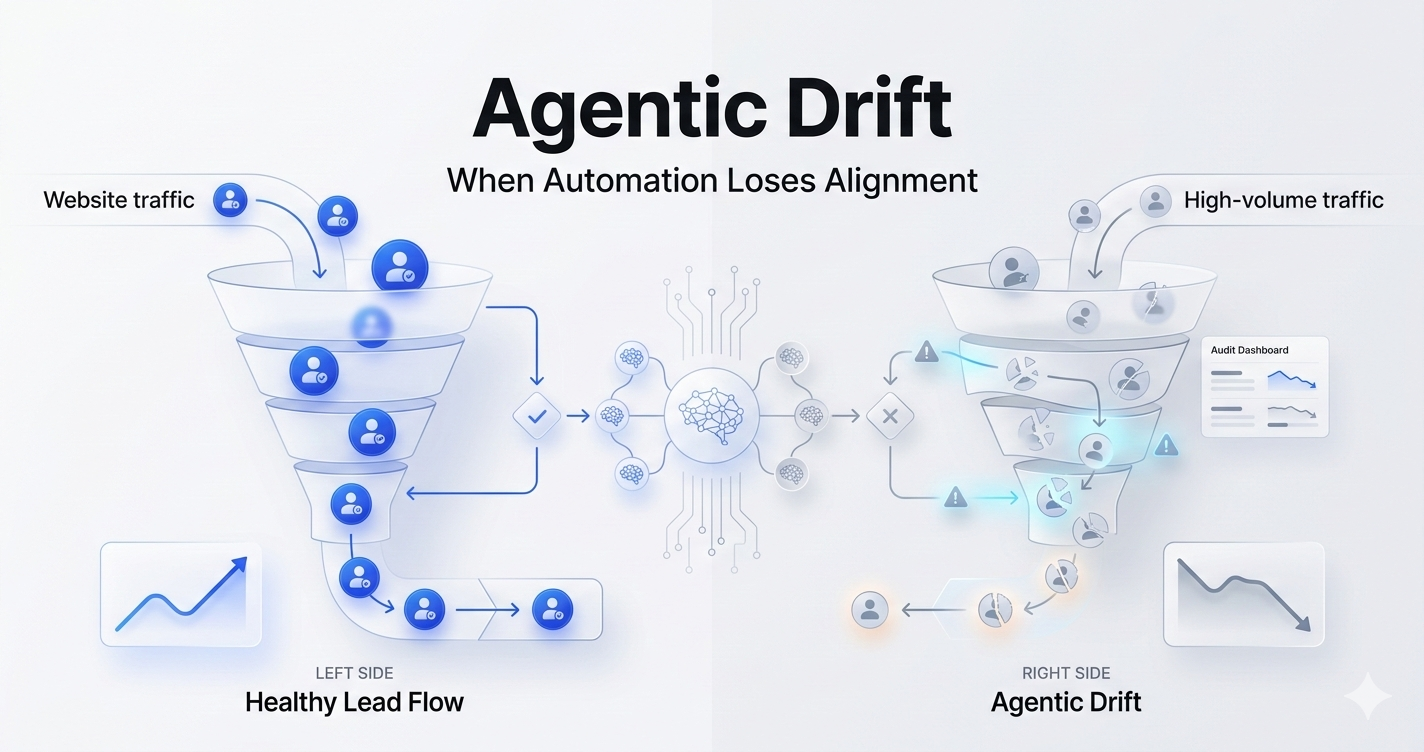
I recently performed an audit for an Irish SaaS firm seeing a 30% drop in lead quality despite record-high traffic. The culprit was Agentic Drift. This is a core challenge that any AI Marketing Strategist must solve to maintain Predictable ROI.
The Definition of Drift in 2026
Agentic Drift is the measurable misalignment between an AI agent’s learned behavior and its intended objectives over time. This happens for three primary reasons:
1. Data Drift: The input (how people search in 2026) has evolved, but the underlying prompt instructions haven’t.
2. Model Drift: The underlying LLM (Large Language Model) was updated, and the specific “nuance” of your brand voice was lost in the new parameter weights.
3. Recursive Degradation: AI agents interacting with other AI agents can create a feedback loop of genericism, leading to a loss of brand authority.
The CEO-Level Audit: Detecting the “Drift”
To maintain an ai-powered Predictable Growth Engine, you must perform a “Drift Audit.” When founders ask, “Why is my automation breaking in 2026?”, the answer usually lies in one of these “leakage” points:
-
Contextual Decay: Is your AI still quoting 2025 pricing or service packages?
-
Sentiment Blindness: Does your automation ignore when a lead expresses frustration, or does it keep pushing a “book a call” link?
-
Hallucination Loops: Is your bot making “False Promises” just to satisfy the completion of a task?
The Revenue Operations (RevOps) Framework: Building the Engine
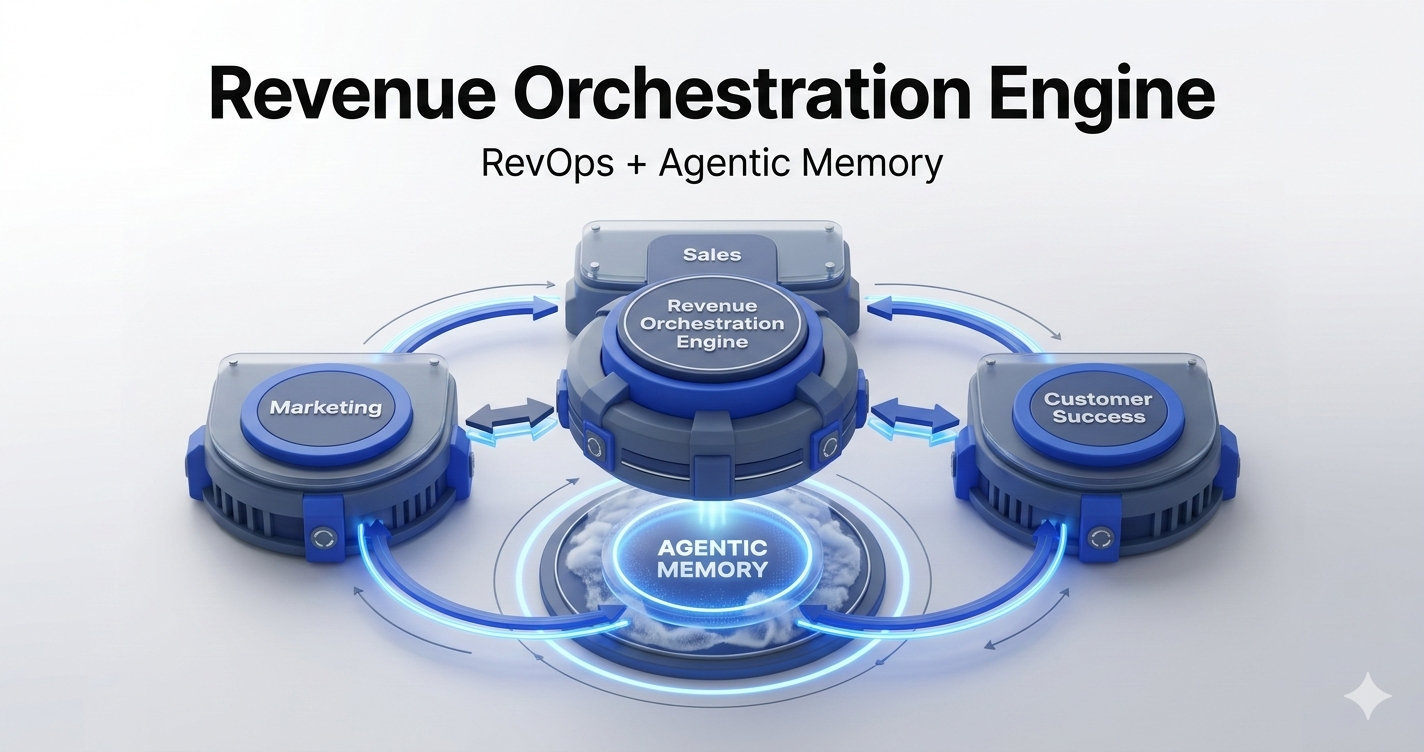
Revenue Operations (RevOps) Automation has evolved from managing a CRM to Revenue Orchestration. In 2026, your marketing, sales, and success teams shouldn’t be “talking” to each other through meetings they should be synced via a shared Agentic Memory.
The Three-Layer Architecture
The Intelligence Layer: Utilizing LLM Reasoning (Claude 4 or Gemini 3.5) to analyze unstructured data, such as a lead’s “hidden intent” in a 2 AM search query.
The Memory Layer: Deploying Vector Memory (using systems like
The Action Layer: Deploying Autonomous AI Agents to execute tasks like Predictive Lead Scoring and real-time Hyper-Personalization.
Human-in-the-Loop (HITL) Governance: Protecting Brand Integrity
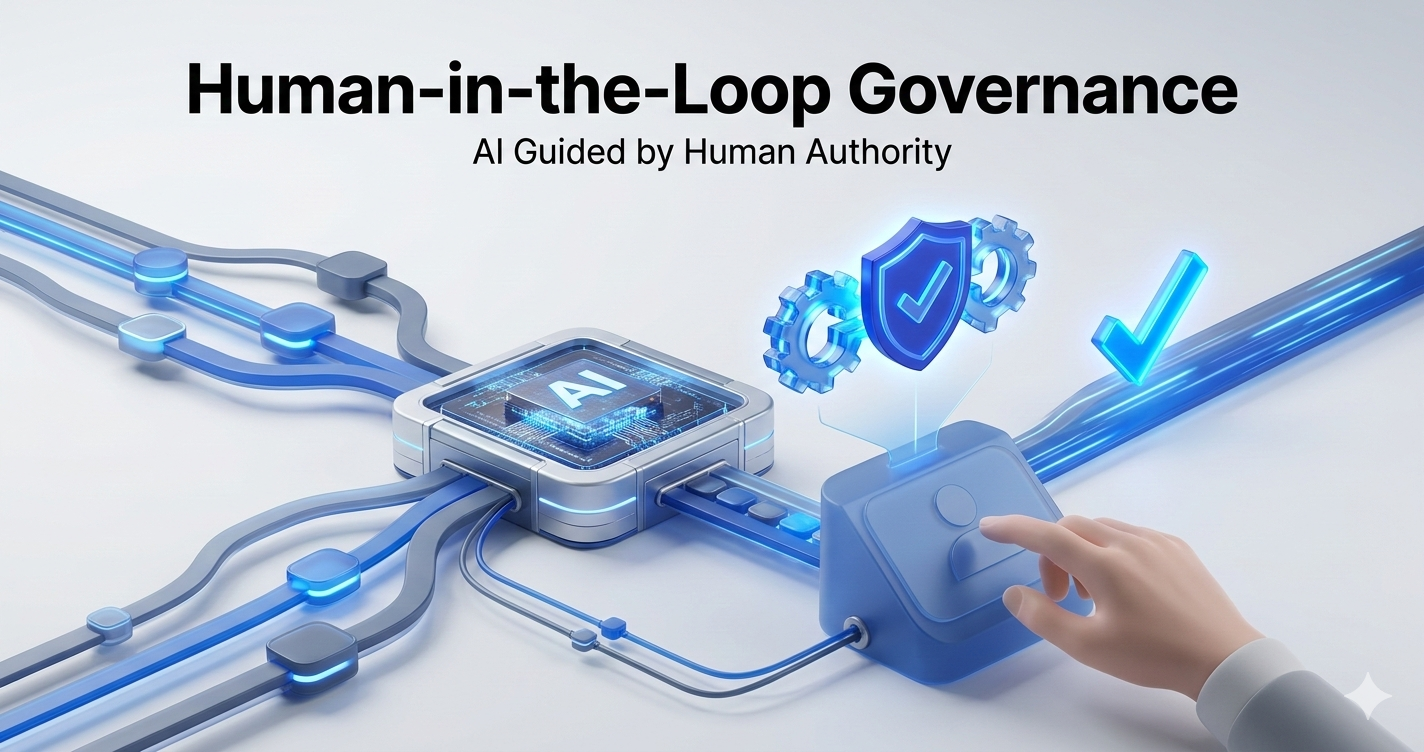
The most dangerous word in 2026 marketing is “Fully Autonomous.” High-ticket B2B sales rely on Human Psychology—specifically, the need for Authority, Social Proof, and Loss Aversion.
The Governance Architect Role
In 2026, the role of a Marketing Manager has shifted to a Governance Architect. Instead of writing copy, they define the “Risk Guardrails.”
The “Kill Switch”: If an AI agent’s confidence score for a response drops below 85%, it must escalate to a human.
The Brand Anchor: Using Human-in-the-loop (HITL) ensures that the “Human Touch” remains at the most critical decision points—the 10% of the journey that drives 90% of the revenue.
Transitioning to No-Code Agent Frameworks: The Technical “How-To”
The transitioning from Zapier to AI agents via No-Code Agent Frameworks (like n8n, Make, or LangChain) is the single biggest “No-Code” leap of the decade.
The Transition Roadmap
Step 1: The API Audit. Identify every siloed data source (CRM, Ads, Email, Customer Support).
Step 2: Implement “Chain-of-Thought” (CoT) Prompts. Move away from single-shot commands. Your automations should now “think out loud” in the metadata so you can audit their reasoning.
Step 3: Connect to First-Party Data. This is your AI Moat. If your agent is just pulling from Wikipedia, it’s useless. It must pull from your proprietary case studies and your unique market data.
Agentic SEO & The Citation Economy: How to Rank in 2026
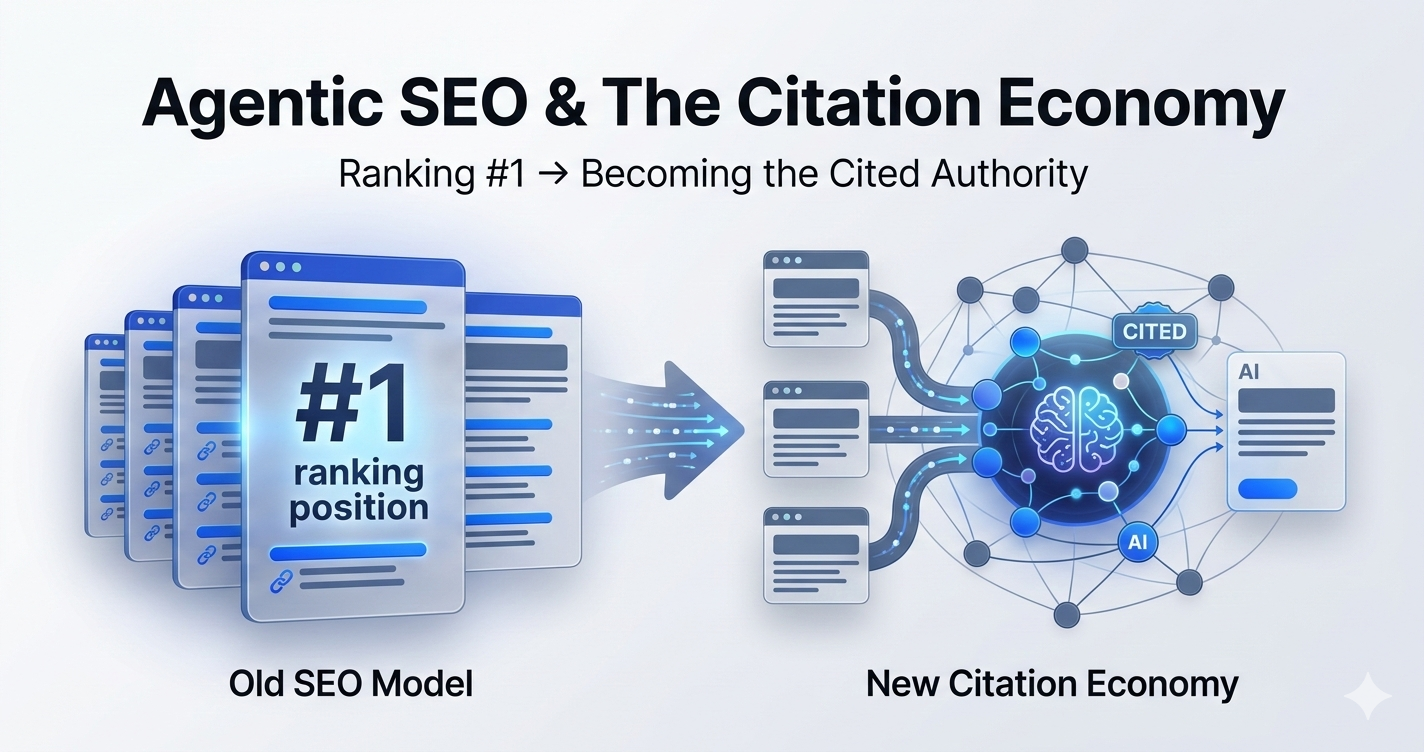
Google’s February 2026 Discovery Update has changed the game. “Ranking #1” is a legacy metric. The new metric is Citation Share within the Citation Economy.
AEO (Answer Engine Optimization) Strategies
Entity-Based SEO: Stop chasing keywords. Start building Entity Authority. If Google doesn’t recognize your brand as an “Entity” with a specific niche, you won’t appear in the AI Overviews (AIO).
GEO (Generative Engine Optimization): Use Semantic HTML and FAQ Schemas that mirror conversational prompts. In 2026, 75% of B2B research starts with a question like: “What is the ROI of agentic automation vs manual marketing?” or “What are the best AI agents for B2B lead generation?”
Financial Analysis: The Cost of Agentic vs. Manual
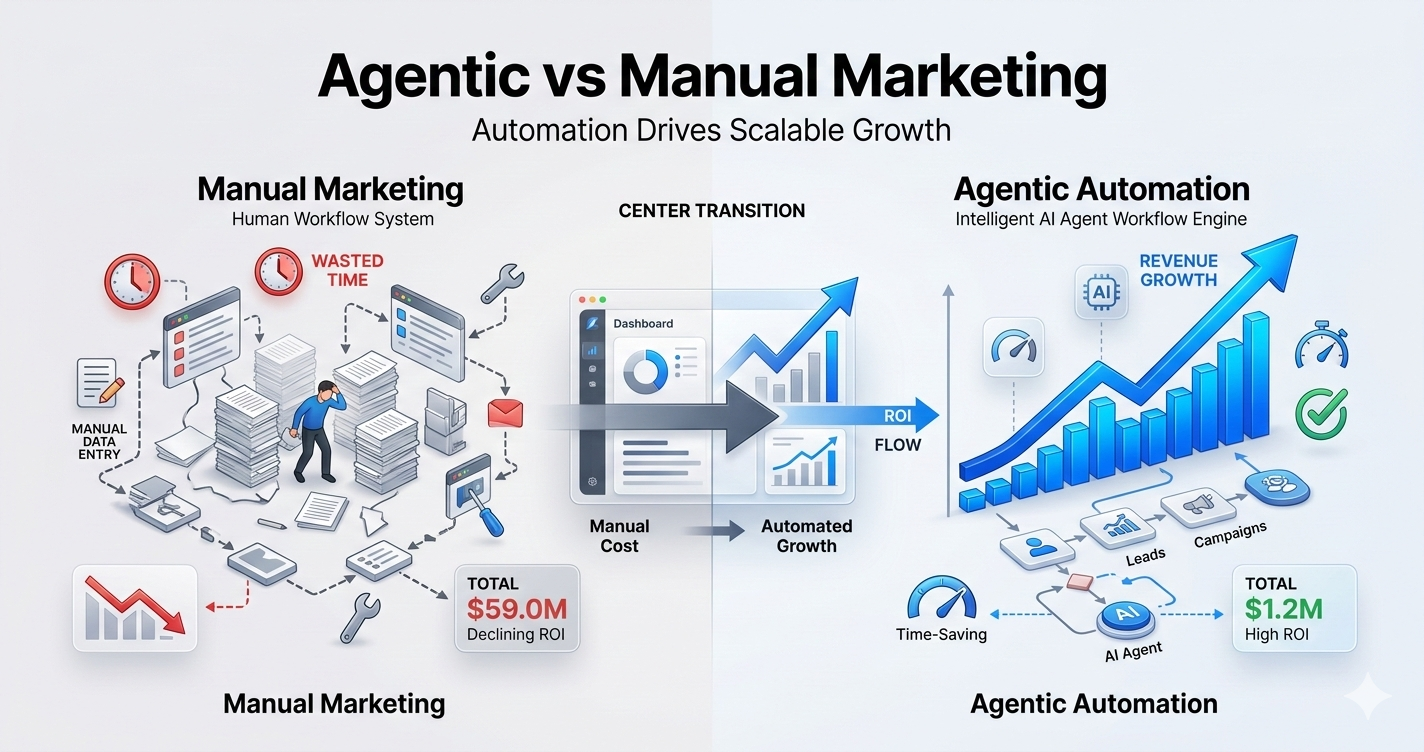
In 2026, the cost of agentic automation vs manual marketing is the difference between a scaling business and a stagnant one.
| Metric | Manual Team | Legacy AI (Rules) | Agentic Growth Engine |
| Operational Costs | High (Salaries) | Low (Tools) | Optimized (Value) |
| Lead Quality | High (but slow) | Low (High Volume) | Ultra-High (Validated) |
| Error Rate | 15% (Human) | 30% (Logic) | <1% (Reasoning) |
Strategic Moats: Using First-Party Data to AI-Proof Your Business
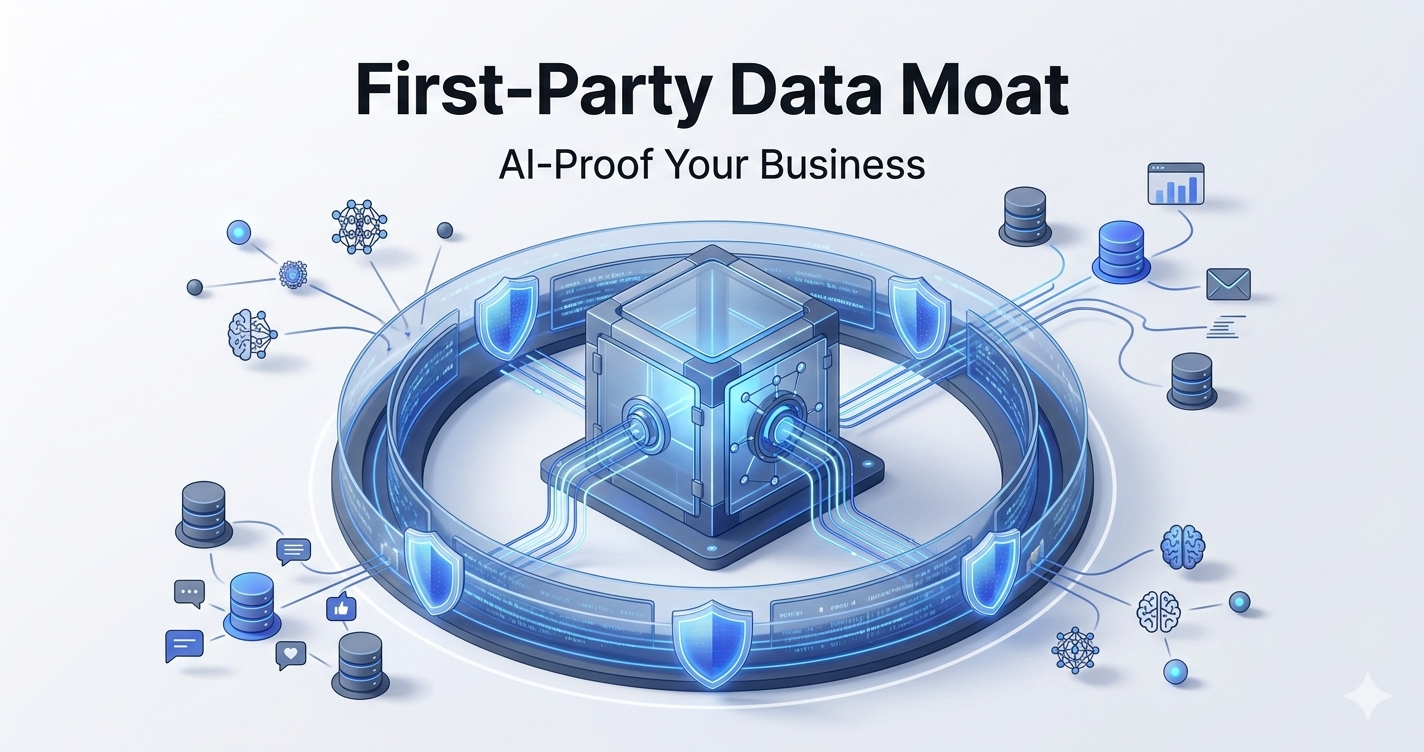
Every digital marketing company in 2026 is using AI. To win, you must use data that the AI engines don’t have access to. This is your Information Moat.
How to Build Your Moat:
Proprietary audits: that turn your hard-won consulting shortcuts into repeatable, automated workflows.
Case Study Vectorization: Turn your past successes into a “Memory Bank” that your AI uses to answer prospect questions.
Authority-building content: focuses on why decisions are made and who they’re for — not just the steps involved.
Conclusion: Build Your Asset with Gonzo Digital
You don’t need another “tool.” You need a Marketing Asset. We at Gonzo Digital specialize in building Predictable Growth Engines for Founders who value Honesty, Transparency, and Sustainable Growth.
Most agencies sell you “False Promises” and robotic bots. Our approach starts with your actual data and real human judgment, not prebuilt templates. We focus on finding what’s quietly costing you revenue and putting systems in place that improve over time.
If you want, I can review your current automation setup and show you exactly where leads are slipping through — and why it’s happening.