Look, the playbook we have all been using for the last twenty years? It’s burning. Right in front of us. For decades, the digital marketing mandate was simple, almost mechanical: fight your way to Google’s first page, earn the click, and hope your landing page copy was good enough to close the deal.
But as we barrel toward 2026, that linear path is fracturing. The customers you want—the ones with budget and intent—are no longer just “searching” in the traditional sense. They are interrogating. They are turning to advanced platforms like ChatGPT, Gemini, Perplexity, and Claude, and they aren’t looking for a list of ten blue links to sift through. They want a single, definitive, trustworthy answer. They want the truth distilled.
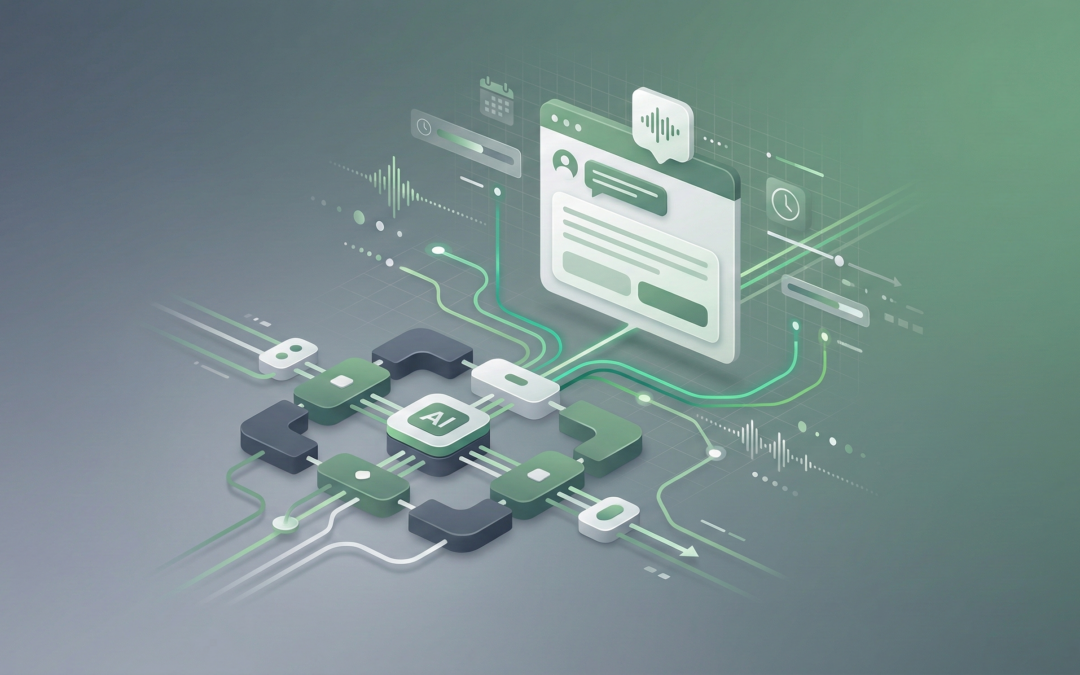
This fundamental behavioral shift has birthed Answer Engine Optimization (AEO). Parallel to this, we are seeing the rise of AI agents in marketing—not just as passive tools we click buttons on, but as active digital entities navigating the web on our behalf. These aren’t your basic, frustrating customer service chatbots; these are autonomous systems capable of reasoning, planning, and executing complex tasks without you holding their hand.
For the Founders and CEOs I speak with across Ireland, this represents a double-edged sword. The threat is stark: invisibility. If your brand is not the “answer” cited by the AI, you effectively do not exist in the user’s journey. But the opportunity? It’s massive. By mastering AI-powered SEO, you can construct predictable growth engines that operate 24/7 which immunes human fatigue.
In this deep dive, we are going to strip away the hype and look at the mechanics of this convergence. We will dissect exactly what AEO is, how autonomous AI agents are revolutionizing workflows, and the specific marketing automation strategies you must adopt to remain visible in an era where machines have become the primary gatekeepers of human knowledge.
Section 1: What Is Answer Engine Optimization (AEO)?
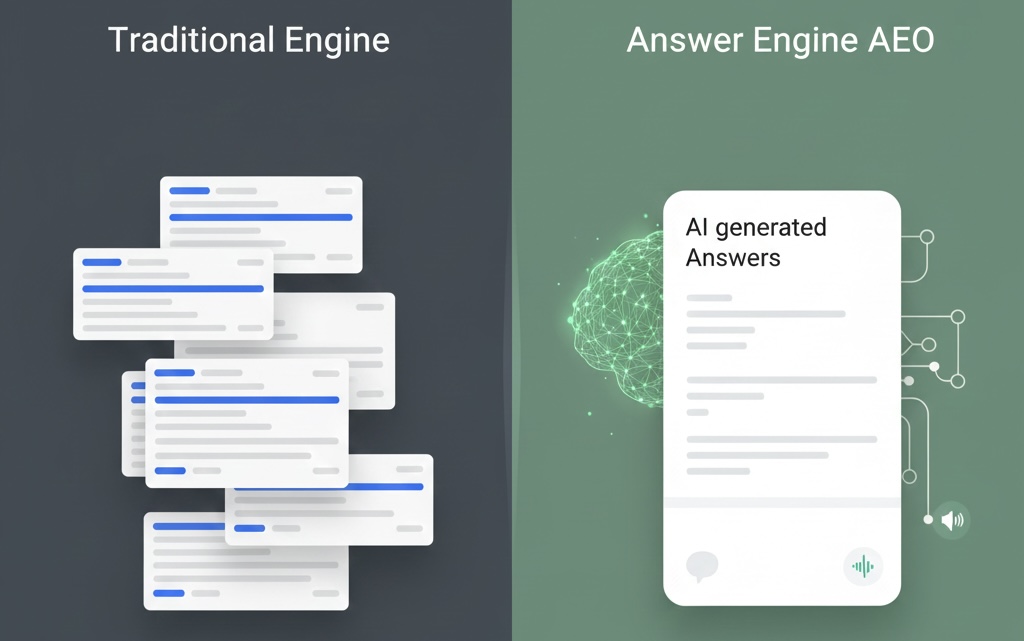
To truly grasp where search is going, you have to understand the distinction between a search engine and an answer engine. It’s a subtle difference, but it changes everything.
Traditional SEO
Traditional SEO has always been the art of organizing content to rank in a list of Search Engine Results Pages (SERPs). The burden of discovery was always on the user: type a query, scan the meta descriptions, click a link, wait for the load, and hunt for the nugget of gold.
Answer Engine Optimization (AEO)
Answer Engine Optimization (AEO) flips that dynamic on its head. It is the process of optimizing your content to be the source of the direct answer provided by an AI model. When a user asks an AI, “What is the best CRM for a small real estate business in Ireland?“, the AI doesn’t hand them a reading list. It synthesizes information from trusted sources and generates a paragraph-long recommendation, a direction Google has formally outlined in its official search documentation. If you aren’t the source, you aren’t seen. Simple as that.
The Shift to Conversational AI SEO
The psychology of the user has changed. We are moving away from “keywordese”—that weird, broken language we use to talk to Google—and toward “conversation.” Conversational AI SEO demands content that mimics natural, fluid human dialogue. It is no longer about awkwardly stuffing the phrase “best no code automation tools” into a page five times to appease a bot. It is about answering the question, “How can I automate my marketing without hiring a developer?” in a way that an AI can easily read, understand, and recite back to the user with authority.
Voice Search AI Optimization
This evolution is deeply tied to golden rules of SEO and voice search AI optimization. Think about how you speak to Siri, Alexa, or Google Assistant. The queries are longer, specific, and phrased as full sentences. These platforms function as early-stage answer engines. They strip away the visual interface of the browser and deliver pure information. If your digital assets aren’t structured for AI-driven search optimization, these voice assistants will simply bypass you for a competitor who has optimized for that critical “zero-click” answer.
SEO Tip Box: Actionable Insight: Stop guessing and start using Free AI Business tools to analyze voice search data for keyword insights and avoid some International SEO Mistakes in 2026 because now it requires more than just translation; it requires Generative Engine Optimization (GEO). Look specifically for “Question Keywords” (Who, What, Where, When, Why, How). Structure your content so that the question serves as an H2 or H3 header, and the answer follows immediately in a concise, 40-60 word paragraph. This specific formatting increases your chances of being the “featured snippet” or the direct answer spoken by the AI.
Section 2: The Role of AI Agents in AEO
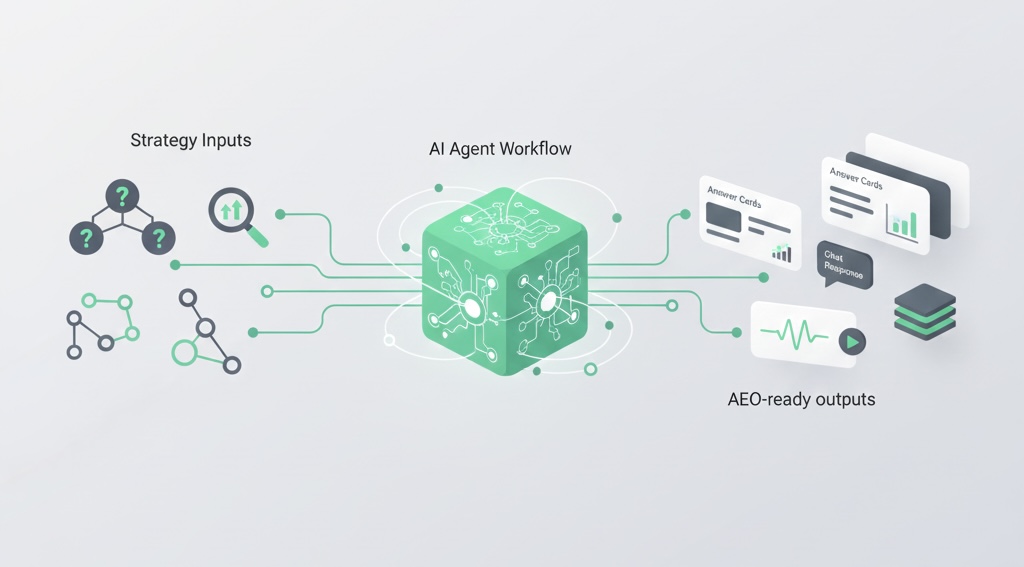
While AEO changes how we are found, AI agents are fundamentally changing how we work.
We need to be clear here: unlike standard AI tools (like a chatbot you talk to once to write an email), an Autonomous AI Agent is a system capable of perceiving its environment, reasoning through a problem, and taking action to achieve a goal—all with minimal human intervention.
Understanding Autonomous AI Marketing
In the real, day-to-day world of autonomous AI marketing, these agents behave far closer to digital team members than traditional software tools. They’re not idle systems waiting for instructions. They stay alert, track what’s happening, and step in the moment a trigger appears.
- Take the Researcher Agent for example. It continually explores the web, picking up emerging trends and spotting competitor gaps—often the kind of insights a human would overlook simply because they were busy, asleep, or caught up with other work.
- The Optimizer Agent: It automatically revisits and updates old blog posts with new data to keep them fresh and relevant, ensuring you never suffer from content decay
- The Distributor Agent: It takes a single blog post and intelligently repurposes it into LinkedIn carousels, tweets, and email newsletters, adjusting the tone for each platform.
This is the next level of AI marketing automation. It allows businesses to scale their output without exponentially scaling their headcount, ensuring that the strategy remains consistent and the execution is flawless, day in and day out
AI-Powered Content Optimization for the Machine Era
To rank in an AEO world, your content needs to be “machine-readable.” AI-powered content optimization involves deploying agents to scan your content against the “knowledge graph” of major answer engines. These agents identify precisely where your content lacks the depth or authority needed to be cited.
For instance, if ChatGPT references your competitor because they published a statistic on “customer retention in 2026,” your AI agent can immediately catch that gap. It can highlight the opportunity and recommend adding your own proprietary data or crafting a stronger counter-argument so you can compete for that same citation.
And to operate at this level, you can’t rely on guesswork. You need solid AI marketing automation services that know how to deploy and manage these agents properly—so they’re truly working for your brand, not just sitting alongside it.
Section 3: How AI Automation Transforms SEO and Content Optimization
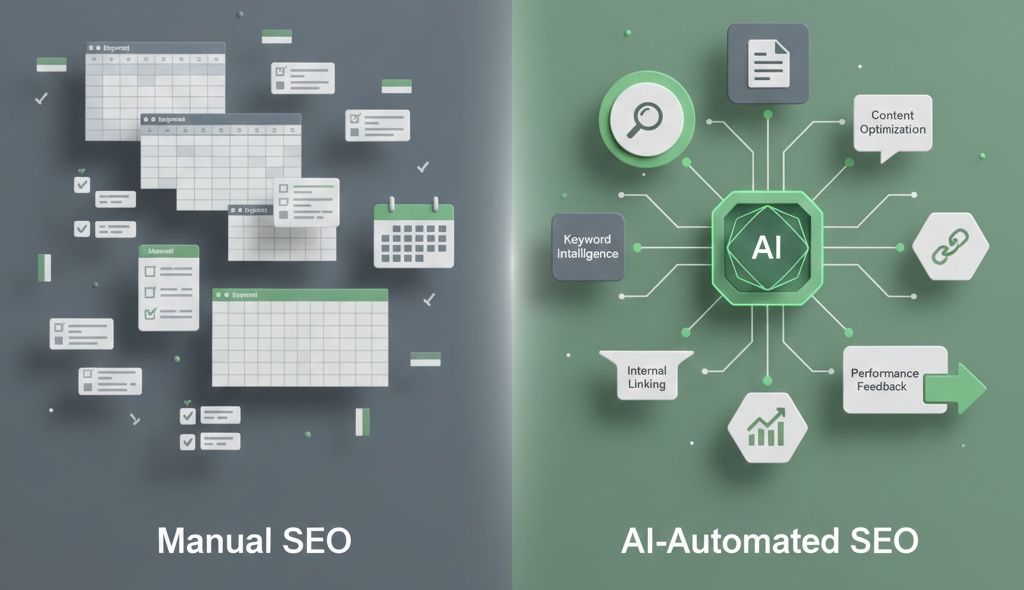
The days of manual keyword research and clunky spreadsheet-based content calendars are fading fast. Frankly, they should have been gone years ago. AI automation in SEO is shifting the focus from “doing the grunt work” to “strategizing the outcome.”
Continuous Optimization Loops
Traditional SEO was often a “set it and forget it” game. You wrote a post, hit publish, and maybe checked it in six months if you remembered. AI automation in SEO enables continuous, always-on optimization. AI tools can monitor your ranking for specific answer queries in real-time. If you lose the “answer position,” the system can alert you or even automatically adjust the content—tweaking the meta tags, adding schema markup, or refining the answer paragraph—to regain the spot before you’ve even finished your morning coffee.
The Power of No-Code AI Automation
For many founders I talk to, the barrier to entry has always been technical skill. “I want to automate this, but I can’t code.”
This is where no-code AI automation becomes a genuine game-changer. Platforms like Make (formerly Integromat), Zapier, and n8n allow us to build complex automated voice search optimization workflows visually, using drag-and-drop interfaces.
Scenario: A user asks a niche question on your site search.
Automation: That question is instantly sent to an AI agent, which categorizes it.
If it’s a new topic, it adds it to your content calendar. If it turns out to be a high-value sales query, your CRM gets notified instantly. You don’t need a developer to make this happen — what you need is a strategic partner who understands how automation logic actually works. By depending on professional no-code automation services, you can build these systems quickly and cost-effectively, skipping the traditional development cycle altogether.
Section 4: Practical Strategies to Implement AI Agents for AEO
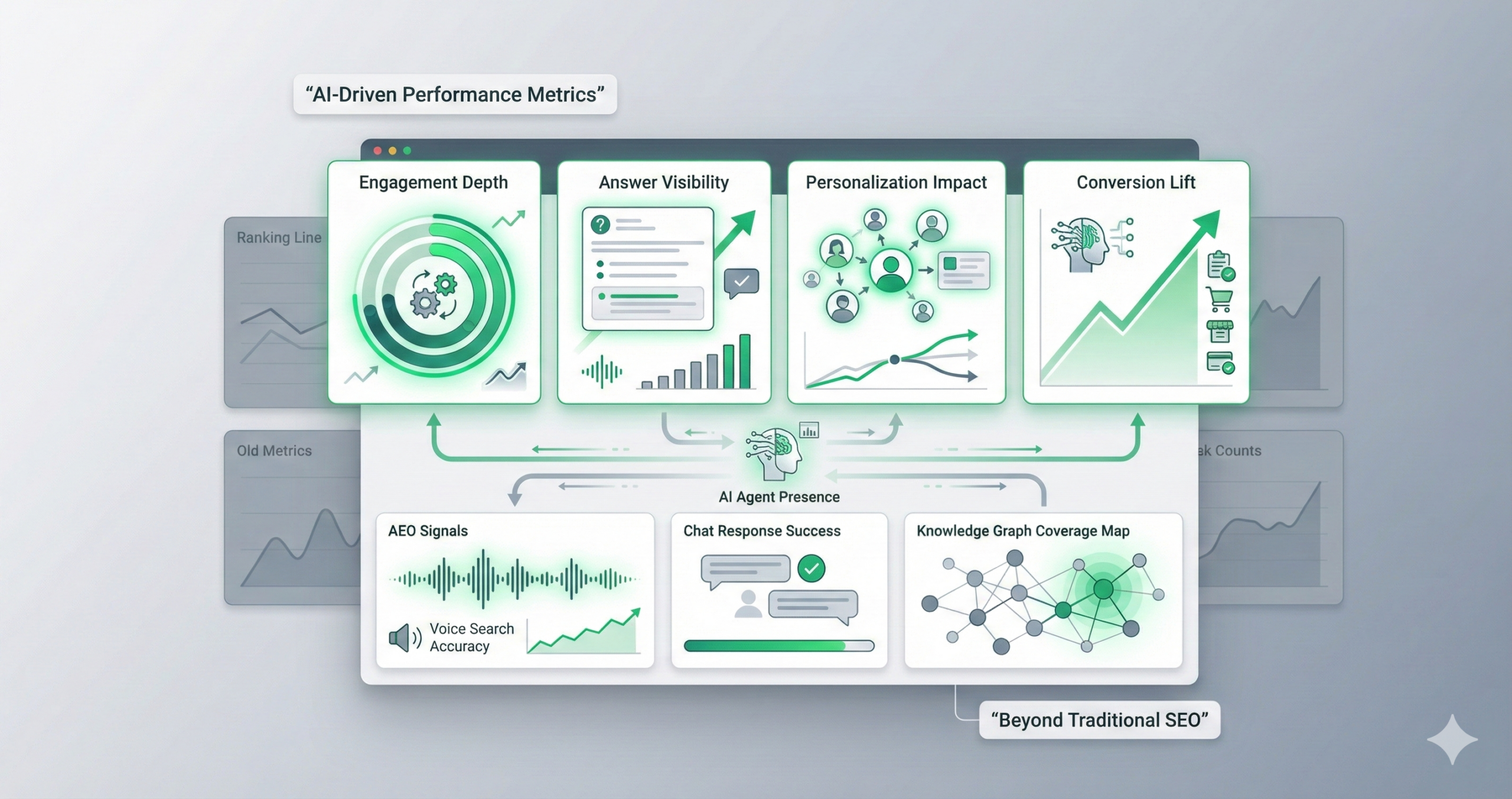
Understanding the theory is just the starting point—putting it into action is where the real work happens. Below are the proven, step-by-step approach to building AI-driven AEO campaigns powered by autonomous AI content creation.
Step 1: Audit Your Digital Entities
Answer engines rely heavily on “Entities” (people, places, things, concepts) rather than just loose keywords. You need to ensure that Google and AI models understand exactly who you are.
Action: Use AI agents to scan your “About Us” pages, LinkedIn profiles, and Crunchbase listings. Ensure absolute consistency in how your brand (Gonzo Digital, for example) is described across the web. Any ambiguity is a penalty in the eyes of an AI.
Step 2: Deploy AI-Powered Workflows for AEO
Create a workflow that specifically targets “Answer Opportunities.” Do not leave this to chance.
Identify: Use an AI tool to scrape “People Also Ask” questions related to your niche.
Draft: Use an autonomous agent to draft concise, factual, and structurally perfect answers to these questions.
Verify: Have a human expert review the answers for accuracy and tone (Human-in-the-loop is non-negotiable).
Publish: Automatically push these to your FAQ schema or blog updates.
Step 3: The Future of SEO with AI Agents
The direction SEO is heading with AI agents is pretty clear: they’re going to start talking to each other. Sooner than most people expect, a user’s personal AI agent will reach out to your business’s AI agent to sort out a booking, check prices, or even negotiate a purchase — all without the person lifting a finger.
Strategy: Make sure your booking systems and pricing information can be accessed through an API or clean structured data. If outside AI agents can “read” your inventory and availability directly, you’re in a far better position than relying on someone clicking through pages.
Callout – Continuous Learning: These agents don’t stay the same. They pick up patterns. Build in feedback loops so they can see which answers perform well, which ones don’t, and then adjust future content creation based on real engagement.
Section 5: Measuring the Impact of AI Agents on SEO and Marketing
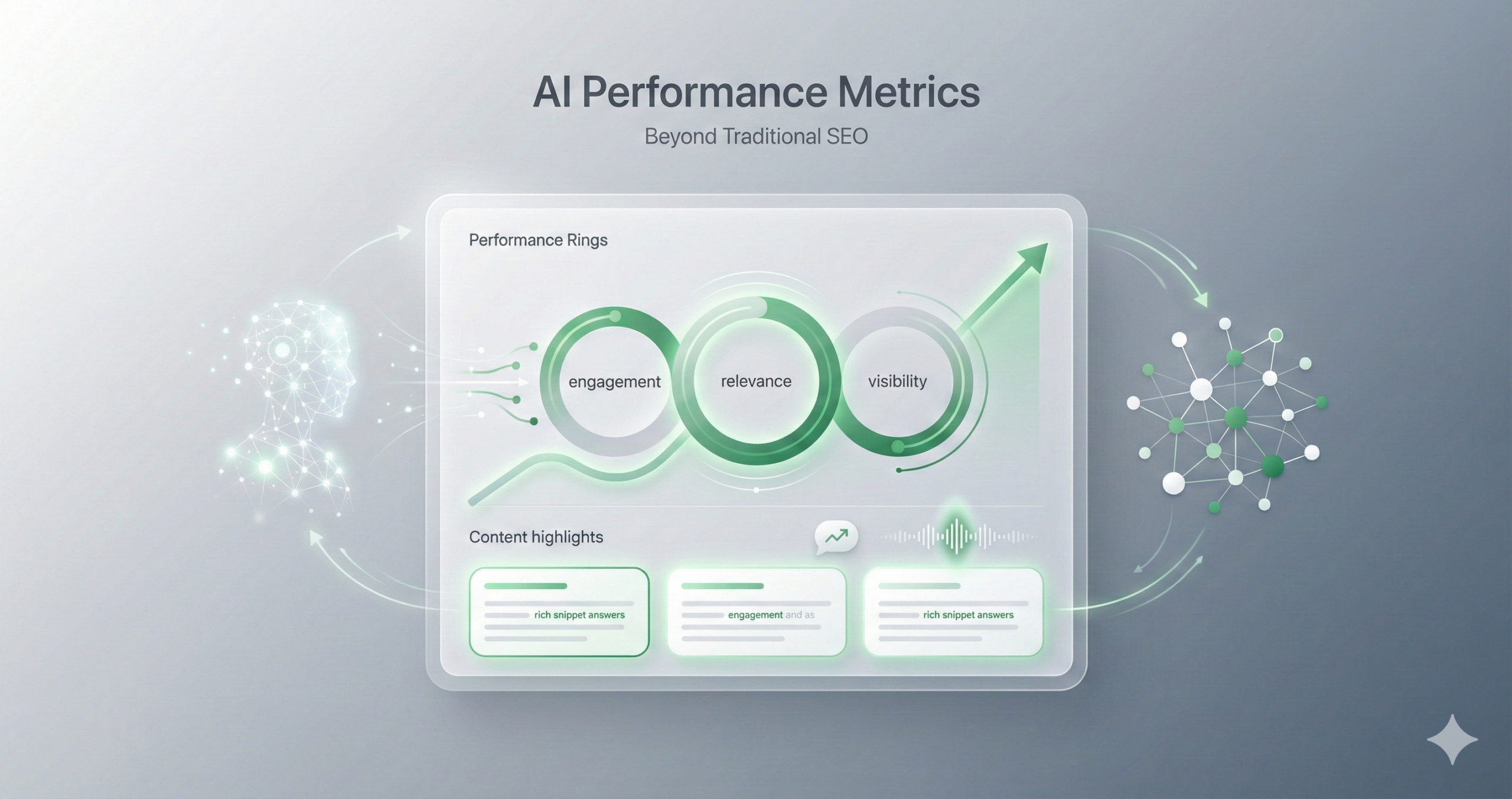
You can’t improve anything you’re not measuring — but the metrics around AI content personalization and AEO look nothing like the old SEO dashboards we’re used to.
Tracking “Share of Model”
Instead of obsessing over rankings or “Share of Voice,” the focus now shifts to Share of Model. The question becomes: How often is my brand the main answer inside ChatGPT, Gemini, or Claude for the keywords I care about?
Manually checking this is nearly impossible, but new AI marketing automation tools are starting to scrape model outputs and give a clearer picture of your visibility inside those LLM “black boxes.”
Real-Time Data and Adaptive Tactics
AI-driven search optimization makes it a lot easier to react in real time. If a big industry story breaks, your AI agents can notice it long before it shows up in your analytics and flag the content that needs updating right away.
Example: If the EU announces a new privacy law, your agent reviews all the articles that reference “data tracking” and suggests the updates required to keep everything compliant and relevant.
To stay ahead, your technical infrastructure has to be prepared to operate at this pace. You need to optimize website voice search AI assistants to ensure your site speed and schema markup are flawless, allowing agents to access your data without friction.
Section 6: AISEO Best Practices and Tools to Watch in 2026

As we approach 2025, AI SEO strategies 2026 will focus heavily on authority and trust. Because AI can generate infinite content in seconds, “generic” content is now effectively worthless.
Techniques for Distinction
Information Gain: You must provide data that the AI doesn’t already have in its training set. Original research, proprietary case studies, and contrarian opinions are gold.
Human Experience: AI cannot have experiences. It cannot feel pain or joy. Lean into simple, real stories — the kind you’d actually share in a conversation. For example, phrases like “I found that…” or “In our experience” instantly signal to readers (and to search engines) that there’s a human behind the insight, not a script. It’s a small shift, but it makes your content feel grounded and genuinely lived-in.
Tools and Platforms
The landscape of SEO automation tools and AI marketing automation tools is exploding.
Perplexity AI: Use it to test how your brand appears in answer engines.
Surfer SEO and Frase have become go-to tools when you need to shape your content around semantic relevance. They make it a lot easier to understand how a piece should be structured before you even start writing.
Make.com: Often ends up being the backbone that ties all your AI agents together so they function as one system instead of a bunch of disconnected tools.
And honestly, this whole ecosystem can feel overwhelming if you’re trying to figure it out on your own. Working with a specialized AI marketing agency can help you choose the right stack for your business goals and spare you months of trial and error.
Zapier vs Make – Which is the best fit for your business?
Conclusion
It’s becoming clearer every year that the days of leaning only on keywords and backlinks are fading out. We’re stepping into a space shaped by AI Agents and Answer Engine Optimization, where the real advantage goes to brands that give machines — and people — the clearest, most reliable, and easiest-to-understand answers.
This shift isn’t about pushing the human element aside. If anything, it gives you more room for it. When AI marketing automation takes over the repetitive parts of traditional SEO, you get to put your energy into strategy, creative thinking, and actually connecting with the audience you want to serve.
The brands that thrive from here are the ones that build systems capable of producing steady, predictable growth. At Gonzo Digital, we work with founders and CEOs across Ireland who want to make that transition with honesty, clarity, and zero fluff.
If you’re thinking about future-proofing your marketing, now’s a good time to explore our AI marketing automation services or talk to our AI marketing agency about how to start building your own autonomous growth engine.
Q: What is the main difference between SEO and AEO?
Ans: Traditional SEO fights for a position in a list of links (discovery). AEO (Answer Engine Optimization) optimizes content to be the single, direct answer synthesized by AI. In AEO, if you aren’t the primary source cited, you are effectively invisible.
Q: Will AI agents replace my marketing team?
Ans: No. AI agents act as “digital employees” that handle execution—research, data updates, and distribution. This allows your human team to focus on high-level strategy and creative storytelling, scaling output without scaling headcount.
Q: How do I optimize content for AI Answer Engines?
Ans: Structure content like a conversation. Use specific questions (Who, What, How) as headers (H2/H3) and follow immediately with a concise, factual 40–60 word answer paragraph. This format is easiest for AI models to digest and recite.
Q: Can I use AI automation without coding skills?
Ans: Yes. No-code platforms like Make and Zapier allow us to build complex, automated workflows using visual, drag-and-drop interfaces. You don’t need a developer; you need a strategic partner to design the automation logic.